BPC-157 capsules (oral) vs injection: what the research actually shows

The short answer
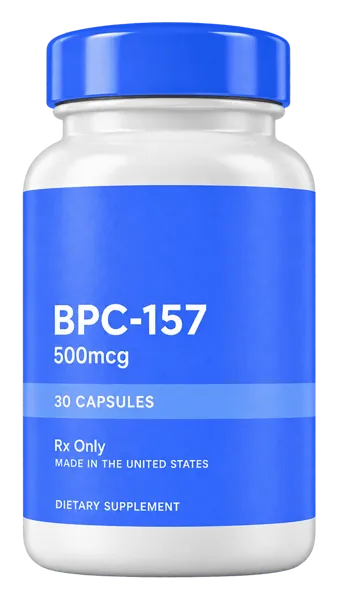
Oral BPC-157 capsules and injections are both built on animal research, not human data. In rat experiments, BPC-157 given by mouth (in drinking water) and by injection both improved healing, and the peptide is unusually stable in gastric juice, which is why an oral route was tested at all. But no published human trial compares the two forms, and no human study shows how much of an oral dose reaches the bloodstream. People who pick capsules usually cite convenience, avoiding needles, or gut-focused use.
Short answer: the capsule-versus-injection question sounds like the important decision, but the research cannot settle it. Almost everything known about either form comes from rodent experiments, where BPC-157 was given both by mouth and by injection and both routes improved healing. There is no published human trial comparing the two, and no human data on how much of an oral dose is actually absorbed. Here is what the research really tested, where the stability and bioavailability arguments come from, why people choose capsules, and what is known about side effects for either route.
Are BPC-157 capsules as good as injections?
Nobody can say yet, because no study has compared oral and injectable BPC-157 head-to-head in people. The comparison you see in marketing copy is built on animal data, and in those animal studies both routes worked. A 2025 narrative review in Current Reviews in Musculoskeletal Medicine is blunt about the human side: it found only three small human studies across every use combined and concludes that BPC-157 “should not be recommended for clinical use in musculoskeletal medicine” until well-designed human trials exist. Notably, none of those three human studies used an oral capsule: they used knee injections, bladder instillations and intravenous infusions. When the human evidence is that thin for the compound itself, any claim that one route is superior is running ahead of the science.
Which form did the actual studies use, oral or injected?
Both, and that is the part most summaries skip. Many of the influential BPC-157 experiments deliberately tested multiple routes in the same study and reported similar results. In a rat ligament-healing study, the peptide was effective given once daily intraperitoneally (10 micrograms or 10 nanograms per kilogram), per-orally at 0.16 micrograms per milliliter in the drinking water, and topically at the injury site, with the animals showing “consistent functional, biomechanical, macroscopic and histological healing improvements” across all three. A 2024 review of BPC-157 in rat intestinal-anastomosis models likewise describes regimens given intraperitoneally once daily or in drinking water at the same microgram and nanogram doses, reporting that both improved intestinal healing. So the honest framing is not “oral versus injection” but “in rats, both routes produced effects”, which is a very different claim from “either route is proven to work in an injured person.” Those doses are reported here as what the studies used, not as a guide for people.
Does oral BPC-157 survive stomach acid?
This is the one place the oral case has a real scientific footing, though it is still animal- and lab-based. BPC-157 was originally identified as a fragment associated with a protein found in gastric juice, and it is unusually stable there. Reviews describe it as native and stable in human gastric juice, “not destroyed in human gastric juice for more than 24 h,” unlike standard growth factors that break down within minutes. That stability is exactly why researchers were able to test an oral route in the first place, and why one review states the peptide can be easily applied “including via the per-oral route.” The important caveat: surviving gastric acid in a test tube or a rat’s gut is not the same as being absorbed into the bloodstream and reaching an injured tendon in a human. Stability answers one narrow question, not the whole delivery story.
What is the bioavailability of oral BPC-157 in humans?
It is essentially unknown. There is no published human pharmacokinetic study of an oral BPC-157 dose, so nobody knows what fraction is absorbed, how blood levels compare with an injection, or how long it circulates. The only human pharmacokinetic data come from the small intravenous study, in which plasma levels returned to baseline within 24 hours (McGuire et al., 2025). The “it’s stable, so it must be well absorbed orally” leap is not supported by human data, and stability and absorption are separate problems: a molecule can resist stomach acid and still cross the gut wall poorly. Anyone quoting a precise oral absorption percentage for humans is going beyond what the published research shows.
BPC-157 capsules vs injection, side by side
Side by side, the two forms differ mostly in practical ways, while the evidence gaps are shared. The table sets out what is actually known for each route.
| Question | Oral capsule | Injection |
|---|---|---|
| Tested in animal healing studies? | Yes, in drinking water in rat ligament and intestinal models | Yes, intraperitoneal and local injection in many rat models |
| Tested in published human studies? | No | Yes, but only three tiny studies (knee, bladder, intravenous), none for tendons |
| Human absorption data | None published | Intravenous only: plasma levels back to baseline within 24 hours in two people |
| Stability argument | Stable in human gastric juice for more than 24 hours (lab finding) | Not relevant; bypasses the gut |
| Needles and sterile technique | Not needed | Needed; an unsterile product carries infection risk |
| Head-to-head human comparison | None | None |
| Anti-doping status (WADA) | Prohibited at all times (S0) | Prohibited at all times (S0) |
Why do people take BPC-157 capsules instead of injections?
The reasons people give are mostly practical rather than evidence-based. Capsules avoid needles, vials and sterile technique, which is a real barrier for many people, and the gastric-stability research gives the oral route a plausible story. BPC-157 is also discussed as a gut peptide: it was first identified in gastric juice and has been studied in rat models of intestinal healing (2024 review), so people interested in digestive symptoms often prefer to take it by mouth. In our July 2026 snapshot of 15 public posts on X about BPC-157, several users described taking oral BPC-157 for gut repair and what they called leaky gut, positioning it as a digestive-support peptide. Those are individual accounts, not outcomes. The idea that a local injection near an injury does more than a capsule is also untested in people. Our tendon-recovery evidence review covers why a strong animal signal is not the same as a human outcome, and the biomechanical findings in detail.
What side effects are reported for oral or injected BPC-157?
No adverse effects were reported in the three small human studies, but none of them tested capsules and together they include only a few dozen people. The 2025 review lists theoretical concerns drawn from how the peptide behaves in cells, including unwanted blood-vessel growth and an overactive nitric-oxide system (McGuire et al., 2025). For injections there is an added, practical risk: an injected product that is not sterile can cause infection, which is why product quality matters more for a vial than for a capsule. USADA’s summary of the overall picture still applies to either route: because BPC-157 “has not been extensively studied in humans, no one knows if there is a safe dose” (USADA). For athletes, the route makes no difference to the anti-doping rule: BPC-157 is prohibited at all times under WADA’s S0 class however it is taken. Our BPC-157 side effects guide covers the wider safety picture.
The honest bottom line
Capsules and injections are two routes for a compound whose human efficacy has not been demonstrated in either form. The stability argument for the oral route is real but narrow, the bioavailability question in humans is genuinely unanswered, and the animal studies people cite tested both routes without proving either one works in a person. If your real goal is getting a stubborn tendon or soft-tissue injury to settle down, the most useful next step is a conversation with a licensed provider about that goal, someone who can weigh the options with stronger evidence behind them, which may be structured rehabilitation, load management, an approved medication, or another supervised therapy.
BPC-157 status: Not FDA-approved; sold by some telehealth providers as a compounded prescription. An FDA advisory committee reportedly voted in July 2026 to recommend allowing pharmacies to compound it; nothing has changed yet. How peptide status works.
Educational information only, not medical advice. Scientific and anti-doping statements are sourced to the peer-reviewed literature and USADA guidance linked above, checked as of October 12, 2026. Doses mentioned are those used in the cited animal studies and are not recommendations.
Sources (5)
Advertising disclosure: links marked "Paid link" go to Bodybuilding Peptides (trybbpeptides.com), an affiliate destination, and The Recovery Dose may earn a commission if you buy there. Our coverage is independent of that relationship, and nothing on this page is medical or legal advice.
 See it at Bodybuilding Peptides