BPC-157 side effects: what the studies recorded, what users report, and why the human data is thin

The short answer
BPC-157's side effects in people are largely unknown. Three small human studies, 30 participants in total, reported no adverse events, and animal toxicity testing found no serious toxicity. But none was a controlled trial, user reports are unverified, and researchers flag theoretical risks such as abnormal blood-vessel growth. Human safety data is thin.
Short answer: the honest list of BPC-157 side effects in people is short because almost nobody has looked. Three small human studies, 30 people in total, recorded no adverse events. Animal toxicity testing in four species found no serious toxicity. Against that, researchers list several theoretical risks drawn from how the peptide behaves in cells, and none of the human studies was large, controlled or long enough to rule them in or out. Here is what was studied, what users say, and where the gaps are.
What is BPC-157?
BPC-157 is a synthetic 15-amino-acid peptide originally isolated from gastric juice, per the review cited below. It is not an FDA-approved drug, and nearly everything known about it comes from laboratory and animal work. A 2025 narrative review from the University of Utah in Current Reviews in Musculoskeletal Medicine describes it as promoting angiogenesis, fibroblast activity and neuromuscular stabilization in preclinical models, which is where both its appeal and its main theoretical safety question come from.
What is BPC-157 used for?
In recovery circles, people use it mainly for tendon, ligament, muscle and joint injuries, and some take oral forms for gut complaints. A 2026 primer for orthopaedic and sports medicine physicians in The American Journal of Sports Medicine notes that peptides like BPC-157 are increasingly marketed to patients for orthopaedic injuries, which the authors give as the reason orthopaedic surgeons need to understand the evidence. The uses people pick it for are mostly not the uses that have been tested in humans: the published human work covers knee pain, a bladder condition and an infusion safety check. For the tendon question specifically, see our tendon evidence explainer.
Does BPC-157 work?
The evidence level, in words: mostly animal and cell studies, plus three small uncontrolled human studies, and no completed randomized controlled trial. Animal studies report healing of tendons, ligaments and muscles, and the orthopaedic primer sums them up as showing potential benefits in tendon and muscle repair that are “largely unvalidated in human trials”. The Utah review’s conclusion is that it should not be recommended for clinical use in musculoskeletal medicine until well-designed human trials exist. “Works in rats” is a real finding; “works in you” has not been tested.
What side effects did the human studies record?
None of the three published human studies reported a side effect, but each was small and none had a placebo group. The Utah review describes the human safety profile as “promising” while stressing how limited the data is. Here is what each study actually did:
| Study | Who and how many | Route | What it recorded about side effects |
|---|---|---|---|
| Lee and Padgett, 2021 (knee pain) | 16 patients reached by phone in a retrospective chart review | Injection into the knee joint | No adverse effects reported, though the review notes screening for adverse events “was not discussed at length” (study) |
| Lee, Walker and Ayadi, 2024 (bladder pain) | 12 women with interstitial cystitis, single procedure | Injection into the bladder during cystoscopy | No adverse events reported and no dropouts; participants were screened for fever, rash, nausea, vomiting and worsening urinary symptoms, per the Utah review |
| Lee and Burgess, 2025 (infusion safety) | 2 healthy adults who had received intravenous BPC-157 before the study | Intravenous infusion over two days | No side effects reported and no measurable effects on heart, liver, kidney, thyroid or blood glucose markers |
Three things limit what this table can tell you. First, 30 people is far too few to detect anything but a common side effect. Second, there was no comparison group in any study, so nobody can say whether a symptom would have been caused by the peptide or by chance. Third, in the knee series patients were surveyed by phone about their pain 6 months to a year after the injection, and the paper does not describe a structured side-effect check. All three share the same first author and were run in clinic settings, and the bladder study used product made by a 503A compounding pharmacy. In all three, a clinician gave the peptide by joint injection, bladder injection or infusion; none tested self-administered injections or capsules.
A formal Phase 1 safety trial in healthy volunteers was registered in 2015 by the sponsor PharmaCotherapia, with adverse events as its primary outcome. Its registry record still lists the status as unknown, with no results posted. A placebo-controlled Phase 2 trial in acute hamstring strains was recruiting as of its February 2026 registry update. Until trials like that report, the human side-effect record is the table above.
What did the animal toxicity studies find?
The most complete safety testing is a 2020 preclinical study in Regulatory Toxicology and Pharmacology that dosed mice, rats, rabbits and dogs. It reported that BPC-157 was well tolerated and “did not cause any serious toxicity” in those species. The findings it did record are worth knowing:
- Local irritation: a local tolerance test found the irritation caused by BPC-157 “was mild”.
- A kidney marker in dogs: repeated dosing produced a decrease in creatinine at one dose level but not at lower doses, and the animals recovered spontaneously after 2 weeks of withdrawal.
- No genetic or embryo-fetal toxicity was found in the study’s tests.
The Utah review adds that the investigators could not identify a minimum toxic dose or a lethal dose. That is reassuring as far as it goes, but animal toxicity testing is the step before human trials, not a substitute for them, and its authors framed the results as supporting the start of a clinical study.
What are the theoretical risks researchers worry about?
The main concern is the same property that makes BPC-157 interesting: it encourages new blood-vessel growth. A 2017 study in the Journal of Molecular Medicine found that BPC-157 increased vessel density in lab assays and vessel numbers in rat muscle, and up-regulated VEGFR2, a receptor central to angiogenesis, in rat muscle and in human endothelial cells. The Utah review lists the proposed unwanted effects, based on BPC-157’s effects in laboratory (in vitro) studies, as pathologic angiogenesis, toxic metabolite formation, and overproduction of nitric oxide, noting that abnormal blood-vessel growth is implicated in tumor growth and inflammatory disease, and that very high nitric oxide is associated in the literature with anemia and altered drug metabolism.
The same review also lays out the counter-evidence: in some models BPC-157 has been reported to downregulate VEGF expression and counteract VEGF-driven tumorigenesis, and to promote corneal healing without new vessel growth. So the cancer question is genuinely open, not answered in either direction. These are mechanisms on paper. None has been observed as a side effect in a person, and none has been tested for in one either.
Is BPC-157 safe?
Nobody can honestly say yes or no. The three human studies recorded no side effects, and animal testing found no serious toxicity, but 30 people in uncontrolled studies cannot establish safety, and the theoretical risks have never been measured in humans. The orthopaedic primer concludes that significant research on safety and efficacy is required before recommendations can be made, and that dosing, frequency and duration remain unknown. There is also a product question the studies do not cover: the Utah review notes BPC-157’s wide availability through non-regulated sources, and the three human studies say nothing about the identity or purity of product bought outside them.
Who should be most cautious?
Based on the gaps above, rather than on any recorded harm, a few groups have more reason than most to talk to a clinician first:
- People with a current or past cancer, because the theoretical concern centers on blood-vessel growth and has not been tested in humans.
- People who are pregnant or breastfeeding, because there is no human data at all, whatever the animal embryo-fetal results showed.
- People on several medications, given the nitric oxide and drug-metabolism question the Utah review raises.
- Tested athletes, because anti-doping rules are a separate risk from side effects. Our guide to whether recovery peptides are banned in sport covers what athletes report.
Side effects studied vs reported: the comparison
| Source | What it can show | What it recorded | Main limitation |
|---|---|---|---|
| Animal toxicity study (2020) | Toxicity at controlled doses across four species | No serious toxicity; mild injection-site irritation; reversible creatinine drop in dogs at one dose level | Animals, not people |
| Three human studies (2021 to 2025) | Whether obvious problems appear in a small group | No adverse events in 30 people | Tiny, uncontrolled, short or phone-based follow-up |
| Cell and mechanism studies | What could go wrong in theory | Pro-angiogenic signaling, nitric oxide effects | Never confirmed or excluded in humans |
| Social posts and recovery threads | What users notice and worry about | Mixed: praise, plus concern about cancer risk | Unverified product, several substances at once, no comparison group |
How does it compare with TB-500 and the oral form?
BPC-157 is often taken alongside TB-500, and the stack’s safety record is thinner still. None of the three human studies used TB-500. The closest is the knee series, where 4 of the 16 patients received BPC-157 plus thymosin beta-4 (TB4; the orthopaedic primer describes TB-500 as its derivative), and that study did not report any adverse effects, which says very little. The primer notes that human orthopaedic data are lacking for TB-4 and TB-500. Our BPC-157 and TB-500 comparison covers the stack in more depth. On route, none of the three published human studies used an oral form, so they offer no side-effect data for capsules; the oral vs injection guide explains what the animal work tested.
What does it cost?
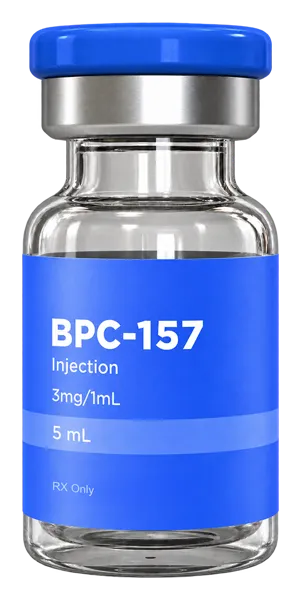
As of October 12, 2026, Bodybuilding Peptides listed its injectable BPC-157 (3 mg/mL, 5 mL vial) at $199 per month, with no three-month plan shown. We include the figure because “cheap” comes up in the safety debate below; price says nothing about safety either way.
What is the community saying?
In our July 2026 snapshot of public posts on X (16 posts, collected July 16 to 20), people mostly described BPC-157 as a tissue-repair and recovery peptide, often paired with TB-500, including after fractures and surgery. On safety, the community openly disagreed. One user said they had been compiling adverse event reports and flagged a cancer risk signal, tying it to the peptide’s VEGF activity, while cautioning that nobody knows how many people use it. Another described it as cheap and very safe. Neither position is backed by controlled data, and that split is a fair summary of where the evidence sits too. The hand-picked Reddit threads in our community data include one from r/ACL titled “An anecdotal review on the use of BPC (BPC-157)”, which is the right label for most of what circulates.
The full roundup, with the source posts, is on our BPC-157 community page, and the hub’s BPC-157 overview covers the substance end to end. If you are tracking a recovery timeline rather than side effects, see how long BPC-157 takes to work.
BPC-157 status: Not FDA-approved; sold by some telehealth providers as a compounded prescription. An FDA advisory committee reportedly voted in July 2026 to recommend allowing pharmacies to compound it; nothing has changed yet. How peptide status works.
Sources
- McGuire FP, Martinez R, Lenz A, Skinner L, Cushman DM. Regeneration or Risk? A Narrative Review of BPC-157 for Musculoskeletal Healing. Current Reviews in Musculoskeletal Medicine, 2025.
- Xu C, Sun L, Ren F, et al. Preclinical safety evaluation of body protective compound-157, a potential drug for treating various wounds. Regulatory Toxicology and Pharmacology, 2020.
- Lee E, Burgess K. Safety of Intravenous Infusion of BPC157 in Humans: A Pilot Study. Alternative Therapies in Health and Medicine, 2025.
- Lee E, Padgett B. Intra-Articular Injection of BPC 157 for Multiple Types of Knee Pain. Alternative Therapies in Health and Medicine, 2021.
- Lee E, Walker C, Ayadi B. Effect of BPC-157 on Symptoms in Patients with Interstitial Cystitis: A Pilot Study. Alternative Therapies in Health and Medicine, 2024.
- Hsieh MJ, Liu HT, Wang CN, et al. Therapeutic potential of pro-angiogenic BPC157 is associated with VEGFR2 activation and up-regulation. Journal of Molecular Medicine, 2017.
- Mayfield CK, Bolia IK, Feingold CL, et al. Injectable Peptide Therapy: A Primer for Orthopaedic and Sports Medicine Physicians. The American Journal of Sports Medicine, 2026.
- ClinicalTrials.gov. NCT02637284: PCO-02 Safety and Pharmacokinetics Trial.
- ClinicalTrials.gov. NCT07437547: BPC 157 for Acute Hamstring Muscle Strain Repair.
Educational information only, not medical advice. Scientific statements are sourced to the primary literature cited above, checked as of October 12, 2026. Study routes and amounts are reported as what the research used, not as recommendations.
Advertising disclosure: links marked "Paid link" go to Bodybuilding Peptides (trybbpeptides.com), an affiliate destination, and The Recovery Dose may earn a commission if you buy there. Our coverage is independent of that relationship, and nothing on this page is medical or legal advice.
 See it at Bodybuilding Peptides