The HHS peptide draft names BPC-157 and TB-500, one at a time. The Wolverine blend is left out.

The short answer
On October 28, 2026, HHS filed a draft, non-binding policy saying it does not intend to act against licensed pharmacies or physicians compounding BPC-157 or TB-500, each on its own, under ten strict conditions. BPC-157 may be injected, taken by mouth or applied topically; TB-500 is injection only. The Wolverine blend, which combines the two, is not covered, because the draft allows only a single active ingredient per product. Neither peptide is FDA-approved, the evidence for injury recovery has not changed, and both remain banned in tested sport.
Key takeaways
- On October 28, 2026, HHS filed a draft, non-binding policy saying it does not intend to act against licensed compounding of BPC-157 or TB-500, each on its own, under ten strict conditions.
- The Wolverine blend is not covered, because condition 7 allows only a single active ingredient per compounded product.
- BPC-157 may be injected, taken by mouth or applied topically, but oral forms need documented human bioavailability; TB-500 is injection only.
- Neither peptide is FDA-approved, research-use-only products are not covered, and state rules still apply.
- The draft says nothing about whether either peptide works, and both remain banned in tested sport.
News, filed October 28, 2026
This page covers a draft federal policy filed for public inspection on October 28, 2026, with Federal Register publication scheduled for October 30, 2026. It is commentary for injury-recovery readers. For the full policy, all six peptides and every condition, read The Treatment Report’s
HHS draft policy explainer
. Educational information only, not medical or legal advice.
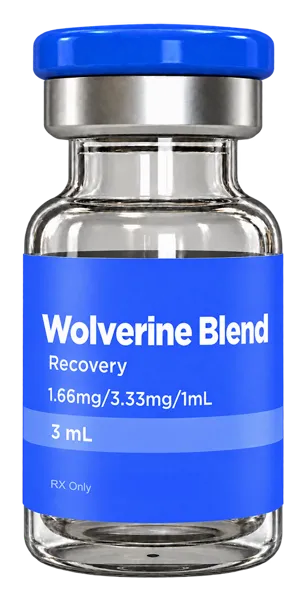
Most of what this site covers comes down to two peptides: BPC-157 and TB-500, often sold together as a “Wolverine” blend for a sore tendon, a strained muscle or a slow-healing ligament. On October 28, 2026, HHS named both of them in a draft compounding policy. It named them separately, though, and that detail decides almost everything for readers of this site. The blend most of you have read about here is the one product the draft leaves out.
This is not a full explainer of the policy. The Treatment Report’s HHS draft policy explainer covers all six peptides, the ten conditions and the reactions in detail. This page sticks to the recovery pair: what the draft says about each half, why the combined product falls outside it, which routes it allows, and what changes for someone dealing with an injury, which turns out to be very little for now.
What did HHS actually file?
HHS filed a notice of availability for a draft policy titled “Enforcement Discretion Policy Regarding 503A Compounding Using Certain Peptide Bulk Drug Substances” (FR Doc. 2026-22192, Docket HHS-OASH-2026-0496). It was filed for public inspection on October 28, 2026, signed by HHS Secretary Robert F. Kennedy, Jr., with Federal Register publication scheduled for October 30, 2026 (Federal Register public-inspection copy).
The core sentence is narrow. HHS “does not intend to take enforcement action against a State-licensed pharmacy, Federal facility, or licensed physician compounding a drug product” using one of six listed peptides, when every condition is met (HHS policy text with appendices). BPC-157 and TB-500 are two of the six. The others are epitalon, KPV, MOTS-c and semax.
Three things about it matter before anything else:
- It is a draft and it is not binding. The notice says the policy “does not establish any rights for any person and is not binding on HHS or the public,” and HHS may revisit it if, among other things, a safety signal or product quality issue arises (Federal Register).
- It is not an FDA approval. Both documents say compounded drugs “are not FDA-approved, which means FDA does not review their safety, effectiveness, or quality before they are marketed.” Neither BPC-157 nor TB-500 is FDA-approved, and the draft does not change that.
- It adds nothing to the 503A bulks list. It is a statement about when HHS will not act while that list is developed through rulemaking, and it lasts only until a final rule addresses each peptide.
Is the Wolverine blend covered?
No. Condition 7 of the draft requires that “the compounded drug product contains only a single Active Pharmaceutical Ingredient (API) listed in Appendix A” (HHS policy). A Wolverine blend puts BPC-157 and TB-500 in one product, which is two active ingredients. The documents do not name the Wolverine blend or any other blend; this is our direct application of the single-ingredient condition, and the same reading appears on The Treatment Report’s status explainer.
The larger versions are further out still. Some clinics sell a four-peptide “Wolverine” that adds CJC-1295 and ipamorelin, neither of which is among the six. The GLOW blend adds GHK-Cu, and KLOW adds GHK-Cu and KPV; injectable GHK-Cu is not one of the six either, and every one of these is a multi-ingredient product. Our Wolverine vs GLOW vs KLOW comparison covers what is in each.
There is a certain irony here. For years the pitch for the Wolverine blend was that two peptides in one vial is simpler and better than two. The draft goes the other way: the one form it describes is a single peptide in a single product. As far as evidence goes, that is not a step backwards.
Our Wolverine stack guide explains why no study has compared a premixed product with two separate ones.
Which routes does the draft allow for BPC-157 and TB-500?
Appendix B of the policy limits each peptide to specific routes. Condition 2 requires the compounded product to match “the identity and limitations in route of administration described in Appendix B” (HHS policy).
| Product | Covered by the draft? | Routes in Appendix B | Extra condition worth knowing |
|---|---|---|---|
| BPC-157 (BPC-157 acetate), alone | Yes, if every condition is met | Subcutaneous, intramuscular, oral, topical | Oral forms need documented oral bioavailability in humans |
| TB-500 (TB-500 acetate), alone | Yes, if every condition is met | Subcutaneous or intramuscular injection only | No oral, nasal or topical route listed |
| Wolverine blend (BPC-157 + TB-500) | No | Not applicable | The draft allows a single active ingredient per product |
Two details in that table matter for readers of this site.
Oral BPC-157 has an extra hurdle. Appendix B lists oral as an allowed route for BPC-157, but condition 8 requires “documentation confirming that the specific formulation provided to a patient achieves an adequate level of oral bioavailability in humans.” That is a high bar for this peptide in particular. As our oral vs injection guide explains, we found no published human data on how much of an oral BPC-157 dose is absorbed. How a pharmacy would meet that condition, and how many can, is not yet known.
TB-500 is injection only. Appendix B describes TB-500 “for subcutaneous or intramuscular injectable dosage forms.” Oral, nasal or topical TB-500 products sit outside the draft. Appendix B also fixes the identity as TB-500 acetate. Our TB-500 research explainer covers the gap between the short TB-500 fragment and the full thymosin beta-4 protein most of the research used; on our reading of condition 2, a product whose contents do not match the identity described in Appendix B would not fit the draft.
What are the other conditions?
There are ten in all, and a pharmacy has to meet every one. The ones most relevant to recovery products are summarized here; the hub explainer lists all ten.
- A registered source with a tested certificate of analysis. The bulk peptide must come from an FDA-registered facility, from an original manufacturer that is CGMP compliant, with a valid certificate of analysis covering identity, purity, potency, endotoxin, microbial limits, impurities and heavy metals (HHS policy, Appendix B testing table).
- A patient-specific prescription. The rest of the FD&C Act still applies, including section 503A’s patient-specific prescription requirement. This describes prescribed, pharmacy-compounded products, not over-the-counter sales.
- Reporting. Pharmacies must report products compounded, serious adverse events and product quality issues to FDA through MedWatch and to the states involved.
- Packaging and label. The only delivery device co-packaged with the drug may be an FDA 510(k)-cleared syringe, and the label must read “This is a compounded drug product. Not for resale.”
The certificate-of-analysis condition will be familiar to anyone who has read the certificate-of-analysis sections of our page on whether the Wolverine stack is safe. Several of the checks that page walks through, such as identity, purity and endotoxin results on a certificate of analysis, now appear in the draft’s own testing table.
What changes for someone with an injury, and what does not?
Very little changes today, and the evidence does not change at all.
What may change, in time. If the draft is finalized or treated as in effect, a licensed clinician who judges it appropriate could prescribe BPC-157 or TB-500, each on its own, from a pharmacy that meets every condition, and HHS says it would not act against that pharmacy. That is a narrower opening than much of the coverage suggests. The documents state no effective date beyond the filing and the scheduled publication. The Alliance for Pharmacy Compounding said it is unclear when the policy takes effect, as reported by the AP, and the Alliance’s Scott Brunner told NPR that dispensing may take time.
What does not change:
- The evidence. The policy is an enforcement position, not a review of whether these peptides work or are safe. The research on BPC-157 for tendon recovery is still mostly animal and cell work, and our evidence review of the Wolverine stack stands as written. Nothing in the draft says either peptide helps an injury heal.
- Research-use-only products. The draft does not cover them. HHS says it acted to “discourage the continued, widespread use of certain research-use-only peptides supplied by foreign manufacturers,” and the policy says such peptides “pose a safety risk to US patients.”
- The blend. A premixed Wolverine product sits outside the draft whoever sells it.
- State rules. The federal draft does not change them, and they vary. In Mississippi, the boards of nursing, pharmacy and medical licensure said in an August 19, 2026 joint statement that it is not permissible for a provider to compound, administer or dispense a non-FDA-approved or research-grade peptide; how they will treat the federal draft is unknown. Louisiana’s Act 374, effective August 1, 2026, goes the other way and protects prescribers and pharmacists who provide compliant compounded peptides.
- Sport. The draft says nothing about anti-doping. BPC-157 is prohibited under WADA’s S0 class and TB-500 is named under S2, both at all times. A pharmacy label makes no difference to a drug test.
What does the recovery community say?
Our community summaries are a July 2026 snapshot of public X posts, 16 about BPC-157 and 16 about TB-500, collected months before the draft. In them, several posters described returning to weight training after tendon or ligament injuries while using TB-500 alongside BPC-157, and a skeptical minority said they had stopped buying the combined stack and preferred BPC-157 on its own. These are individual, unverified accounts, not measured outcomes.
Read next to the draft, the snapshot shows the gap plainly. The combination people describe using is the one form the policy leaves out. The single-peptide form it does describe is what that skeptical minority had already moved to, for their own reasons and without any study to back them.
There is a political layer too. Kennedy has called himself a “big fan” of peptides, as Reuters, NBC News, the AP and TIME all reported, and the AP alone reported that he described using BPC-157 for a muscle injury. A personal anecdote, from anyone, is not evidence that a peptide works. Appendix B also records that for both BPC-157 and TB-500, FDA’s drug center recommended against listing and the advisory committee voted in favor.
Can a clinician prescribe BPC-157 and TB-500 as two separate products?
The draft does not say. Condition 7 is about what is inside one compounded product: a single active ingredient. We found nothing in either document about whether one patient may be prescribed two separate single-ingredient products at the same time, so we do not guess. That is a question for a prescriber and a pharmacy once the policy’s status is settled, and it is one of the open questions we are watching.
Does the draft say BPC-157 or TB-500 works for injuries?
No. It is an enforcement position, not an evidence review, and it repeats that FDA does not review the safety, effectiveness or quality of compounded drugs before they are marketed. The research picture for tendon, ligament and muscle injuries is the same as it was on October 27.
When could any of this reach a patient?
Nobody can say yet. The documents give no effective date. Written comments are open “until 2 weeks after date of publication in the Federal Register” on Docket HHS-OASH-2026-0496, and the exact deadline depends on the publication date (Federal Register). Then a pharmacy still has to meet every condition. We will update this page when the Federal Register notice posts.
What is still unknown?
- Whether, when and in what form the draft is finalized, and when it is treated as in effect.
- How many pharmacies can meet the sourcing, testing, bioavailability and reporting conditions for BPC-157 or TB-500, and how soon.
- Whether one patient may be prescribed separate single-ingredient BPC-157 and TB-500 products at the same time.
- Whether FDA proposes adding either peptide to the 503A bulks list through rulemaking.
- How state boards, including Mississippi’s, respond to the federal draft.
The short version
The draft names both halves of the Wolverine stack, one at a time, with tight conditions: BPC-157 by injection, by mouth with bioavailability proof, or topically; TB-500 by injection only. The blend itself is outside it. Neither peptide is FDA-approved, the evidence for injury recovery is unchanged, research-use-only products are not covered, state rules still apply, and both remain banned in tested sport. For the full policy, read the hub explainer.
BPC-157, TB-500 and Wolverine blend status: BPC-157: Not FDA-approved. Under a draft HHS policy filed Oct 28, 2026, HHS does not intend to act against licensed compounding of it alone, under strict conditions: injection, oral or topical. TB-500: Not FDA-approved. Under a draft HHS policy filed Oct 28, 2026, HHS does not intend to act against licensed compounding of it alone, under strict conditions: injection only. Wolverine blend (BPC-157 + TB-500): Not FDA-approved. The draft HHS policy filed Oct 28, 2026 covers single-ingredient products only, so this two-peptide blend is not covered. How peptide status works.
Frequently asked questions
Is BPC-157 FDA approved?
No. BPC-157 is not FDA-approved. Under a draft HHS policy filed Oct 28, 2026, HHS does not intend to act against licensed compounding of it alone, under strict conditions: injection, oral or topical. The draft itself says compounded drugs are not FDA-approved, which means FDA does not review their safety, effectiveness or quality before they are marketed.
Is BPC-157 legal in the US?
There is no simple yes. The draft HHS policy describes when HHS does not intend to act against a state-licensed pharmacy or physician compounding BPC-157 alone for a patient-specific prescription, and it is a non-binding draft with no stated effective date. It does not cover research-use-only products, and state rules vary: Mississippi's boards said in August 2026 that providers may not compound, administer or dispense a non-FDA-approved or research-grade peptide, while Louisiana's Act 374 protects compliant compounding.
Is oral BPC-157 covered by the HHS draft?
Only on paper, for now. Appendix B lists oral as an allowed route for BPC-157, but condition 8 requires documentation that the specific oral formulation reaches an adequate level of bioavailability in humans. We found no published human absorption data for oral BPC-157, so whether any oral product can meet that condition is unknown; our oral vs injection guide covers the research.
Can TB-500 be taken by mouth or as a cream under the draft?
No. Appendix B describes TB-500 for subcutaneous or intramuscular injectable dosage forms only, and fixes its identity as TB-500 acetate. Oral, nasal or topical TB-500 products sit outside the draft.
Does the HHS draft change anything for drug-tested athletes?
No. The draft is about compounding enforcement, not sport. BPC-157 is prohibited under WADA's S0 class and TB-500, with thymosin beta-4, under S2, in and out of competition, and a pharmacy label makes no difference to a drug test. Our guide to whether recovery peptides are banned in sport covers the listings.
Does the draft make research-use-only peptide vials okay?
No. The draft does not cover research-use-only products. HHS frames the policy as a more controlled alternative to them, says it acted to discourage the widespread use of research-use-only peptides supplied by foreign manufacturers, and says such peptides pose a safety risk to US patients.
Sources
- Federal Register, “Enforcement Discretion Policy Regarding 503A Compounding Using Certain Peptide Bulk Drug Substances,” notice of availability, FR Doc. 2026-22192, Docket HHS-OASH-2026-0496, filed October 28, 2026 (public-inspection copy; after publication, federalregister.gov/d/2026-22192).
- HHS, policy text with Appendix A and Appendix B (hhs.gov PDF).
- AP, October 28, 2026, via Fox 8; NPR, October 28, 2026.
- Mississippi boards’ joint statement, August 19, 2026; Louisiana Act 374 digest.
- WADA Prohibited List; USADA on BPC-157 and the 2018 list changes.
- Biçer et al., 2026, rat Achilles tendon study of BPC-157 and TB-500 alone and together.
Educational information and commentary only, not medical or legal advice. Regulatory statements are drawn from the HHS draft policy and Federal Register notice linked above, current as of October 28, 2026. The draft can change; check the Federal Register for its current status.
About the editorial team
Advertising disclosure: links marked "Paid link" go to Bodybuilding Peptides (trybbpeptides.com), an affiliate destination, and The Recovery Dose may earn a commission if you buy there. Our coverage is independent of that relationship, and nothing on this page is medical or legal advice.
 See it at Bodybuilding Peptides