Wolverine vs Glow vs KLOW: what each blend adds, and what has been studied
The short answer
Wolverine is BPC-157 plus TB-500. Glow adds GHK-Cu, a copper peptide best known from skin creams, and KLOW adds GHK-Cu plus KPV, an anti-inflammatory fragment of alpha-MSH. None of the three has been studied as a blend. GHK-Cu's human data are topical skin studies, KPV has only cell and animal studies, and we found no published trial in which either was injected into people.
Key takeaways
- Wolverine is BPC-157 plus TB-500; Glow adds GHK-Cu, and KLOW adds GHK-Cu plus KPV.
- None of the three has been studied as a blend, in people or in animals.
- The one controlled test of the two-peptide core, in 32 rats with repaired Achilles tendons, found the pair did no better than either peptide alone.
- GHK-Cu's human data are small topical skin studies and KPV has only cell and mouse gut studies; we found no trial that injected either into people.
- Each added ingredient adds unknowns: FDA says it has identified no human exposure data for KPV or for the TB-500 fragment.
Wolverine, Glow and KLOW are three names for one idea that keeps growing. Start with the two recovery peptides lifters already pair, BPC-157 and TB-500, then add a copper peptide from skin care, then add an anti-inflammatory fragment of a skin-darkening hormone. Online, each step is pitched as an upgrade.
This page sets the three blends side by side from a recovery point of view: what each one contains, why one is marketed for skin and another for injuries, whether any of them has been tested, and what the two add-on ingredients, GHK-Cu and KPV, actually have behind them. For the full picture of the two-peptide core, start with our Wolverine stack guide. This is educational commentary, not medical advice, and it does not cover how to use any of these products.
What does each blend contain?
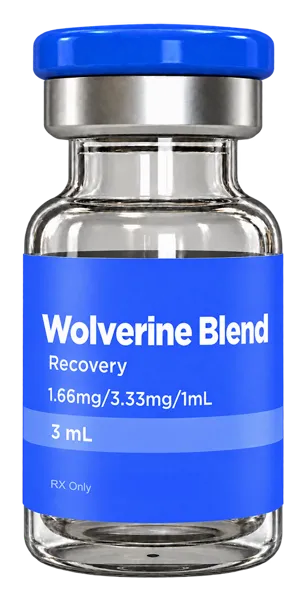
Wolverine contains two peptides, Glow contains three and KLOW contains four, and every version carries the same BPC-157 and TB-500 core. Wolverine is BPC-157 and TB-500, as covered in our Wolverine stack guide.
Glow adds GHK-Cu: Bodybuilding Peptides (trybbpeptides.com) lists its Glow Blend as an injectable combining GHK-Cu, BPC-157 and TB-500 (product page checked October 17, 2026). KLOW adds KPV on top of that: The New Yorker described the KLOW blend as including “KPV, GHK-Cu, TB-500, and BPC-157” (The New Yorker, 2026).
| Ingredient | Wolverine | Glow | KLOW | What it is |
|---|---|---|---|---|
| BPC-157 | Yes | Yes | Yes | A synthetic 15-amino-acid peptide derived from a gastric protein |
| TB-500 | Yes | Yes | Yes | Sold as a short fragment of thymosin beta-4 |
| GHK-Cu | No | Yes | Yes | A copper-binding tripeptide found in human plasma |
| KPV | No | No | Yes | A three-amino-acid fragment of alpha-MSH |
| Studied as this blend | No | No | No | No published study of any of the three combinations |
All three names are retail labels, not defined drugs. The ratio of each peptide is set by whoever sells the vial, and no study has compared ratios for any of them.
One detail matters for everything below: the TB-500 in these products is described as a fragment of thymosin beta-4. An anti-doping laboratory identified the 17 to 23 fragment of thymosin beta-4 in a product sold as TB-500 (Esposito et al., 2012), while most published research uses the full-length protein. Our Wolverine stack guide covers the core blend and the other versions sold under the name, and our guide to BPC-157 capsules versus injection covers the capsule format of the two-peptide core.
Why is Glow sold for skin and Wolverine for recovery?
Glow is sold for skin because of GHK-Cu, and Wolverine is sold for recovery because of the animal injury research on BPC-157 and TB-500. GHK-Cu has a long history as a skin-care ingredient. A 2015 review written by researchers at a copper-peptide skin-care company describes GHK as present in human plasma, saliva and urine and declining with age, and summarizes cell, animal and cosmetic studies on skin repair (Pickart et al., 2015). The Glow product page itself names skin health first, then tissue recovery.
Wolverine, by contrast, takes its name from a comic-book character known for healing, and its two ingredients are the ones lifters reach for after tendon and muscle injuries.
KLOW sits between them. In the posts our community tracker collected (see below), KLOW was described as a recovery blend, with KPV there for inflammation. So the marketing runs from Wolverine (recovery) to Glow (skin plus recovery) to KLOW (recovery plus inflammation), but all three lean on the same two recovery peptides for their repair claims.
Has any of the three been studied as a blend?
No. We found no published study of Wolverine, Glow or KLOW as a combination product, in people or in animals. The closest thing is a test of the two-peptide core. In a 2026 rat study, 32 rats had their Achilles tendons cut and repaired and were split into four groups: saline, BPC-157, TB-500, or both (Biçer et al., 2026). TB-500 alone gave the clearest results, and the authors wrote that “combined BPC-157 and TB-500 treatment did not confer additional benefits” over either peptide alone. They called the study exploratory, with eight rats per group.
That is the only controlled test we found of even two of these ingredients together, and the pair did no better than either peptide on its own. No study has added GHK-Cu or KPV to that pair. A PubMed search we ran on October 17, 2026 for KPV together with GHK, BPC-157, TB-500 or thymosin beta-4 returned two papers: a pharmacy-compounding commentary and a review of tripeptides in wound healing. Neither tested the peptides together.
What does the GHK-Cu evidence add for recovery?
For injuries, GHK-Cu adds two animal studies of ligament and muscle, some animal wound-healing work, and no human data. Its best human evidence is for skin, and even that is mixed.
- Ligament (animal). In 72 rats after ACL reconstruction, GHK-Cu injected into the knee joint improved knee laxity at 6 weeks compared with saline, and one of the two tested concentrations also gave stiffer grafts at 6 weeks. The laxity difference was no longer significant at 12 weeks, and there was no difference in ultimate load, gait or tissue scores. The authors wrote that the benefit “could not last as treatment discontinued” (Fu et al., 2015).
- Muscle (animal and cell). In mice exposed to cigarette smoke, a model of the muscle wasting seen in chronic lung disease, GHK-Cu reduced loss of muscle mass and grip strength, and it protected lab-grown muscle cells (Deng et al., 2023). That is muscle wasting, not a training injury.
- Wound healing (animal). The company-authored 2015 review reports that GHK “induces systemic wound healing in rats, mice, and pigs” (Pickart et al., 2015).
Two 2026 orthopaedic reviews put this in context. A narrative review for orthopaedic and sports physicians found that GHK-Cu “showed promise in wound healing” but that no clinical data support its use for musculoskeletal conditions (Mayfield et al., 2026). A scoping review of six peptides, GHK-Cu among them, found that 67% of the publications used animal models and concluded that the claimed musculoskeletal benefits “remain unsubstantiated by current human trials” (Tewari et al., 2026).
On skin, which this site does not cover in depth: in one small randomized study after laser resurfacing, completed by 13 people, GHK-Cu skin products made no objective difference to redness, wrinkles or skin quality, although users reported higher satisfaction (Miller et al., 2006). Complexion Science’s glow peptide guide and The Treatment Report’s GHK-Cu overview cover the skin research.
What does KPV add, and has it been tested in injuries?
KPV adds an anti-inflammatory signal seen in cells and mouse gut models, and we found no study of it in a tendon, ligament, muscle or joint injury. KPV is the last three amino acids of alpha-melanocyte-stimulating hormone (alpha-MSH).
A 2008 review explains why researchers singled it out: the full hormone darkens skin, and KPV was described as keeping the anti-inflammatory effect but with a “lack of pigmentary action” (Brzoska et al., 2008).
The main experimental work is in bowel inflammation. In human intestinal and immune cell lines, very low (nanomolar) concentrations of KPV reduced inflammatory signaling, and KPV given in drinking water reduced chemically induced colitis in mice (Dalmasso et al., 2008). A second group reported earlier recovery and less inflammation in two mouse colitis models (Kannengiesser et al., 2008). The 2008 review lists arthritis among the conditions where the parent hormone was studied in animals, but that is alpha-MSH, not KPV.
A PubMed search we ran on October 17, 2026 for KPV with arthritis, tendon, muscle or joint found no KPV injury study. The hits were reviews, unrelated uses of the abbreviation, and one lab study of cartilage cells in which KPV was one of several melanocortin peptides tested, with the abstract crediting the protective effects to other peptides in the panel (Can et al., 2020). Gut and Immune’s KPV research guide walks through the colitis studies.
Is any of the GHK-Cu or KPV evidence from injection in people?
No. None of the human evidence for either add-on comes from injection.
- GHK-Cu: the human studies we found are of creams, serums and similar products applied to the skin. FDA’s page on bulk substances that may pose safety risks in compounding lists GHK-Cu for injectable routes and says “there are limited data in humans” to inform safety (FDA). On ClinicalTrials.gov on October 17, 2026, the GHK-Cu studies we found were a recruiting trial of a topical gel for acute skin wounds (NCT07437586), a not-yet-recruiting patch study and a completed facial treatment study. None was an injection trial.
- KPV: the same FDA page says FDA “has not identified any human exposure data” on drug products containing KPV by any route. A ClinicalTrials.gov search for KPV as an intervention on October 17, 2026 returned no studies, and a PubMed search on the same date for clinical or randomized trials mentioning KPV returned only unrelated studies that use the same abbreviation, none testing the peptide.
So when a blend adds GHK-Cu or KPV, it adds an ingredient with no published human injection study that we could find, on top of two ingredients that have no controlled human trial in a sports injury.
The evidence for each ingredient, side by side
This table states the evidence level in words. Read the last column first: it is the one that matters for an injury.
| Ingredient | Cell and animal work | Human studies we found | Human injury evidence by injection |
|---|---|---|---|
| BPC-157 | Many rat studies, including tendon and muscle | A few small uncontrolled reports (Mayfield et al., 2026) | None controlled |
| TB-500 | Mostly on full thymosin beta-4; direct TB-500 evidence limited to one study (McGuire et al., 2026) | Full protein only, mainly eye and skin wounds | None |
| GHK-Cu | Rat ACL, mouse muscle wasting, animal wound healing | Small topical skin studies | None |
| KPV | Human cell lines, mouse colitis | None | None |
| Any of the three blends | None | None | None |
The 2026 scoping review of TB-500 and thymosin beta-4 adds one more caveat for the shared core: tendon, ligament and muscle work was “comparatively sparse”, and human evidence sat mostly in eye and skin-wound settings (McGuire et al., 2026). Our TB-500 research explainer and BPC-157 and TB-500 comparison cover the two core peptides in detail.
Does adding more peptides mean more benefit?
Not on the evidence available. The only controlled test of combining two of these peptides found the pair did no better than one (Biçer et al., 2026), and nobody has tested what a third or fourth adds. The Biçer authors suggested the lack of an added effect may reflect the two peptides converging on shared pathways, a hypothesis they said needs confirmation.
What a bigger blend does add, for certain, is more unknowns. Each extra ingredient brings its own gaps: FDA lists possible immune reactions from aggregation and impurities for compounded injectable GHK-Cu and, for certain routes, TB-500, and says it has identified no human exposure data for KPV or for the TB-500 fragment (FDA). A four-peptide vial also makes it harder to tell which ingredient, if any, is behind a change someone notices. Complexion Science’s KLOW vs Glow comparison covers the skin side of the same question and reporting on mislabeled blends.
What are people saying about KLOW and the Wolverine stack?
In public posts, KLOW is framed as the recovery-and-inflammation version of the stack, and the blend format itself is up for debate. In our July 2026 snapshot of 12 public X posts about KPV on therecoverydose (collected July 15 to 16), several posts described KLOW as a blend of KPV with BPC-157, TB-500 and GHK-Cu marketed toward recovery.
Commenters mentioned people paying monthly for the convenience of a single vial and argued over whether a blend is worth it compared with buying the compounds separately. KPV mostly appeared as one piece of multi-peptide recovery routines rather than on its own. One commenter described being close to full function about six weeks after a calf tear while combining KPV with other peptides and red light; that is one self-report with several things changed at once.
The skeptics show up too. In our July 2026 snapshot of 16 public X posts about TB-500 (collected July 14 to 19), a few commenters said they had stopped buying the combined stack and favored BPC-157, and one said they remained unsold on the BPC-157 and TB-500 pairing. Others raised doubts about whether products labeled TB-500 contain the fragment or the full protein. These are individual, unverified accounts, not evidence that any blend works.
Wolverine vs Glow vs KLOW: the bottom line
Wolverine, Glow and KLOW are the same untested core with more untested ingredients on top. For recovery, the useful comparison is not which blend has more peptides but which claims have evidence behind them.
BPC-157 and TB-500 have animal injury studies and no controlled human trial in a sports injury, and the one controlled test of the pair found no added benefit. GHK-Cu adds a short-lived rat ligament result, mouse muscle-wasting data and topical skin studies. KPV adds cell and mouse gut-inflammation studies. We found no published study in which either add-on was injected into people.
Anyone sorting through these blends for an injury will learn more from a diagnosis and a clinician’s view of the evidence for that injury than from the number of peptides on the label. Our guide to peptides for injury recovery sets the wider field side by side.
Status (BPC-157, TB-500, injectable GHK-Cu, KPV and the Wolverine, GLOW and KLOW blends): BPC-157: Not FDA-approved. Under a draft HHS policy filed Oct 28, 2026, HHS does not intend to act against licensed compounding of it alone, under strict conditions: injection, oral or topical. TB-500: Not FDA-approved. Under a draft HHS policy filed Oct 28, 2026, HHS does not intend to act against licensed compounding of it alone, under strict conditions: injection only. Injectable GHK-Cu: Not FDA-approved. Injectable GHK-Cu is not one of the six peptides in the draft HHS compounding policy filed Oct 28, 2026; its status did not change. KPV: Not FDA-approved. Under a draft HHS policy filed Oct 28, 2026, HHS does not intend to act against licensed compounding of it alone, under strict conditions: topical or oral. Wolverine blend (BPC-157 + TB-500): Not FDA-approved. The draft HHS policy filed Oct 28, 2026 covers single-ingredient products only, so this two-peptide blend is not covered. GLOW blend (GHK-Cu, BPC-157, TB-500): Not FDA-approved. The draft HHS policy filed Oct 28, 2026 covers single-ingredient products only, and GHK-Cu is not one of its six. Not covered. KLOW blend (GHK-Cu, BPC-157, TB-500, KPV): Not FDA-approved. The draft HHS policy filed Oct 28, 2026 covers single-ingredient products only, and GHK-Cu is not one of its six. Not covered. How peptide status works.
Educational information only, not medical advice. Research statements are sourced to the papers and pages linked above, checked as of October 17, 2026. Community observations come from our July 2026 X post snapshots for KPV and TB-500.
Frequently asked questions
What peptides are in KLOW?
KLOW is sold as a four-peptide blend: The New Yorker described it as including KPV, GHK-Cu, TB-500 and BPC-157. KPV is a three-amino-acid anti-inflammatory fragment of alpha-MSH, and GHK-Cu is a copper-binding tripeptide best known from skin care. The ratio of each peptide is set by whoever sells the vial, and KLOW has never been studied as a blend.
What's in Glow peptide?
Glow is a three-peptide blend of GHK-Cu, BPC-157 and TB-500, sold as an injectable. GHK-Cu is the add-on: a copper-binding tripeptide found in human plasma, whose human evidence comes from small topical skin studies rather than injection. The Treatment Report's GHK-Cu overview covers that research.
What is in the Wolverine stack?
The Wolverine stack is BPC-157 plus TB-500, the same two-peptide core that Glow and KLOW also carry. BPC-157 is a synthetic 15-amino-acid peptide derived from a gastric protein, and TB-500 is sold as a short fragment of thymosin beta-4. Our Wolverine stack guide covers the core blend and other versions sold under the name.
Has Wolverine, Glow or KLOW been studied as a blend?
No. We found no published study of Wolverine, Glow or KLOW as a combination product, in people or in animals. The closest is a 2026 rat Achilles study of the two-peptide core, which found that combining BPC-157 and TB-500 gave no added benefit over either alone. No study has added GHK-Cu or KPV to that pair.
Sources (16)
About the editorial team
Advertising disclosure: links marked "Paid link" go to Bodybuilding Peptides (trybbpeptides.com), an affiliate destination, and The Recovery Dose may earn a commission if you buy there. Our coverage is independent of that relationship, and nothing on this page is medical or legal advice.
 See it at Bodybuilding Peptides