BPC-157 and TB-500 after surgery: what is known about the Wolverine stack, and what to ask your surgeon

The short answer
No study has tested the Wolverine stack (BPC-157 plus TB-500) after surgery in people. The closest evidence is animal work: one 2026 rat study of repaired Achilles tendons found each peptide helped some measures but the pair added nothing over either alone. The only human report from a surgical setting is three uncontrolled dental nerve-injury cases that also used other drugs, and the one registered surgical trial, a small placebo-controlled test of BPC-157 after rotator cuff repair, has not started recruiting. The practical step is a conversation with your surgeon, not a protocol.
Key takeaways
- No published human study has tested BPC-157, TB-500 or the pair after an orthopaedic operation, as of October 17, 2026.
- The first registered surgical trial, a small placebo-controlled pilot of BPC-157 alone after rotator cuff repair, has not started recruiting.
- In the one rat study of the pair after Achilles repair, each peptide helped some measures but the combination added no benefit over either alone.
- The only human report from a surgical setting is three uncontrolled dental nerve-injury cases that also used a corticosteroid and an anesthetic.
- Surgery adds anesthesia, blood thinners, corticosteroids and implants, none of which has been studied alongside these peptides in people.
People recovering from an Achilles repair, a rotator cuff repair or a plated fracture often ask about the Wolverine stack, the pairing of BPC-157 and TB-500, and whether it has any place in their recovery. The short version: no one has tested it after surgery in people. This page sets out what has actually been studied in surgical settings, labeled animal or human, explains what a 2026 dental case series does and does not show, and ends with the questions worth taking to the surgeon who did the repair. It contains no protocols, timing or amounts; those are not ours to give and no study supports any.
Has either peptide been studied after surgical repair in people?
No. As of October 17, 2026, we found no published human study of BPC-157, TB-500 or the pair after an orthopaedic operation. The first one is registered but has not begun: a University of Arkansas pilot trial of BPC-157 after arthroscopic rotator cuff repair, randomized and placebo-controlled, with an estimated 30 participants and an estimated start date of January 1, 2027 (ClinicalTrials.gov NCT07803250). Its own record describes BPC-157 as a compound that “has not undergone formal human clinical trials”. It tests BPC-157 alone, not TB-500 and not the stack, and it has posted no results because it has not enrolled anyone.
For TB-500 there is nothing comparable. A 2026 scoping review of 80 studies of thymosin beta-4 and TB-500 found that human evidence sat mostly in eye and skin wound settings, that direct TB-500 evidence came from a single study, and that musculoskeletal work was “comparatively sparse” (McGuire et al., 2026). FDA’s compounding page names TB-500 as “Thymosin beta-4, fragment (LKKTETQ)”, while 70 of the 80 studies in that review tested thymosin beta-4 itself. Our TB-500 explainer covers that gap.
A 2026 UCLA scoping review in the American Journal of Sports Medicine looked at BPC-157, TB-500 and four other peptides across bone, tendon, ligament, muscle and cartilage. It found that 67% of the publications were animal studies and that human studies were “a handful”, most without robust controls.
That conclusion is the closest thing to a specialist consensus on the post-surgical question.
What animal surgical-repair models exist?
A handful of animal studies used a surgical injury and then measured healing, and they are the whole basis for the post-surgery idea. Only one gave both peptides together. All of them are preclinical: they show what happened in rats, mice or rabbits under laboratory conditions, not what happens in a person recovering from an operation.
| Attribute | Biçer 2026 | Krivic 2006 | Sebecic 1999 | Brady 2014 |
|---|---|---|---|---|
| Peptide tested | BPC-157, TB-500, and both together | BPC-157 | BPC-157 | Full thymosin beta-4 protein (not the TB-500 fragment) |
| Animal and surgery | 32 rats, Achilles tendon cut and surgically repaired | Rats, Achilles tendon cut from the heel bone | Rabbits, segment of forearm bone removed | Mice, fibula surgically cut (osteotomy) |
| Main finding | TB-500 alone improved tissue scores and strength; BPC-157 alone was numerically better on strength and total tissue scores without reaching significance; the pair added no benefit over either alone | Better functional and mechanical healing than saline; reduced the healing setback caused by a corticosteroid | Healing of the bone gap comparable to bone marrow or a bone graft | Stronger, stiffer healing bone than saline (41% higher peak force, about 25% stiffer) |
| Tested in people | No | No | No | No |
The most relevant of these is the only controlled test of the pair. Turkish researchers cut and surgically repaired the Achilles tendons of 32 rats and split them into four groups of eight: no treatment, BPC-157, TB-500, and both. When the tendons were examined four weeks after repair, TB-500 alone produced significantly better tissue scores and a significantly higher load to failure; the combination improved one tissue score; and the authors reported that combined treatment “did not confer additional benefits” over either peptide alone.
They called the work exploratory (Biçer et al., 2026). In other words, the one animal study of the stack after surgery did not find a stacking effect.
The older studies tested one peptide at a time. A Zagreb group reported that BPC-157 improved tendon-to-bone healing after the rat Achilles was detached, and that it reduced the healing impairment caused by the corticosteroid methylprednisolone (Krivic et al., 2006). In rabbits with a segment of forearm bone removed, BPC-157 produced healing the authors judged comparable to bone marrow or a bone graft (Sebecic et al., 1999). In mice with a surgically cut fibula, the full thymosin beta-4 protein produced calluses with a 41% higher peak force to failure than saline (Brady et al., 2014).
For the wider tendon literature on BPC-157, TB-500 and the pair, see our tendon evidence review, and for knees, ligaments and muscle, our guide to peptides for injury recovery.
What does the dental nerve-injury case report show and not show?
It shows three people whose numbness improved while they received a mix of drugs that included both peptides; it does not show that the peptides, or the pair, caused that improvement. In a 2026 paper in Frontiers in Oral Health, Froum and colleagues described three patients with inferior alveolar nerve injury (numbness of the lower lip and chin) after implant placement, implant removal with grafting, or a tooth extraction with bone grafting.
Each received weekly local infiltrations, over four weeks, of a mixture containing ARA-290, TB-500 and BPC-157 together with dexamethasone, a corticosteroid, and the local anesthetic bupivacaine with epinephrine. All three reported improved sensation, and no treatment-related complications were recorded (Froum et al., 2026).
| What the case series shows | What it does not show |
|---|---|
| Three people with nerve injury after dental surgery improved during follow-up | That the peptides caused the improvement; the authors write that “causality cannot be established” |
| No treatment-related complications were recorded in three cases | Safety in a larger group, or over the long term |
| TB-500 and BPC-157 were given in the same mixture | Any effect of the pair on its own, since it was always given with ARA-290, a corticosteroid and an anesthetic |
| A rationale for future controlled trials | Anything about tendon, ligament, bone or joint surgery |
The authors are direct about the limits. They note that spontaneous recovery is well established after minor injuries of this nerve, there was no control group, and they describe peptide treatment as investigational, with unresolved questions on safety, delivery, dosing and long-term outcomes. Read fairly, it is a hypothesis paper; the authors call the cases “hypothesis-generating clinical observations”. It is one of two uncontrolled human reports involving both peptides that we know of; our page on whether the Wolverine stack works lays out all of them.
Why does surgery change the questions?
Surgery adds variables that none of the studies above measured in people: anesthesia, pain medicines, antibiotics, blood thinners, corticosteroids, implants, and a surgeon’s rehabilitation plan. BPC-157 has been studied alongside some of these, but only in rats. One Zagreb study reported that BPC-157 shortened bleeding time in rats given heparin, warfarin or aspirin after a tail amputation (Stupnisek et al., 2012), and the Achilles study above reported that it counteracted a corticosteroid’s effect on healing (Krivic et al., 2006). Whether anything similar happens in a person on post-operative medicines is unknown, which is exactly why a surgical team needs to know.
The regulator’s position adds to that. FDA’s page on bulk substances that may present significant safety risks in compounding still carries entries for both peptides, now in its list of substances that were previously in category 2 and later withdrawn by the nominators.
For TB-500 it states that it “has not identified any human exposure data”, and for BPC-157 it says it has identified “no, or only limited, safety-related information” and flags possible immune reactions and peptide-related impurities (FDA). Our Wolverine stack safety page covers the side-effect record and the blood-vessel growth concern in more detail.
What questions should a reader take to their surgeon?
The useful questions are the ones that let the surgical team weigh your plan against what they know about your repair and your medicines. A short list, drawn from the gaps above:
- Is there any human evidence for this after my specific operation? As of October 2026, the answer for both peptides is no, and the first BPC-157 surgical trial has not started. Asking lets the surgeon say so in their own words.
- Could it interact with what I am taking? Bring the full list: anesthesia plans for any further procedure, pain medicines, blood thinners, corticosteroids, antibiotics. The only interaction data are from rats.
- Does anything about my repair or implant change the picture? Tendon grafts, anchors, plates and screws heal on their own timelines, and no study has looked at either peptide alongside them in people.
- Is there a reason to be more cautious in my case? Reviewers raise blood-vessel growth and cancer as theoretical concerns, no data exist for people with a cancer history, and none exist for pregnancy or breastfeeding; our safety page sets out the sources.
- How would we tell if something went wrong, and would it confuse my follow-up? Unexpected swelling or infection after surgery needs a clear history; an undisclosed injectable makes that harder.
- Am I drug-tested? WADA’s 2026 list prohibits BPC-157 under S0 and names TB-500 among thymosin beta-4 derivatives under S2, both at all times (WADA; USADA). Our guide to whether recovery peptides are banned in sport explains what that means for the blend and for each peptide.
- What do you recommend instead, and what does the evidence say for it? The standard options after a repair, such as structured physical therapy and, in some cases, injections, have their own evidence base; our peptides vs cortisone comparison shows how differently the two are studied.
If you are weighing where a product comes from, peptidesinreview’s list of questions to ask before you buy any peptide covers sourcing, testing and labeling, which is a separate issue from whether it helps.
What are people saying about peptides after surgery?
Public posts show that post-surgical use is a live topic, but they describe experiences, not outcomes anyone measured. In our July 2026 snapshot of 16 public X posts about BPC-157 on The Recovery Dose, one user described using BPC-157 and TB-500 together after a fracture and surgical repair; the snapshot labels such accounts as self-described and not evidence of effect. In the matching TB-500 snapshot, commenters described a torn pectoral ligament and a torn rotator cuff and said they returned to training within weeks of starting a peptide protocol, and the snapshot notes these reports often combine TB-500 with other substances.
Researchers have noticed the trend too. A 2026 Sports Health paper led by researchers in Brown University’s orthopaedics department studied Reddit users’ perspectives on peptide therapy after orthopaedic surgery (Rosenberg et al., 2026). Neither an abstract nor the full text was openly available when we checked, so we do not summarize its findings here. None of these accounts can separate a peptide’s effect from the surgery, the rehabilitation and natural healing, which is the job a controlled trial does.
So, is the Wolverine stack worth considering after surgery?
The honest answer is that there is no human evidence either way. Animal surgical models gave each peptide some favorable results, the one animal test of the pair found no extra benefit from combining them, the human record from a surgical setting is three dental cases mixed with other drugs, and the first human surgical trial (of BPC-157 alone) has not started. Orthopaedic reviewers currently advise against using these peptides as an add-on to standard care. For the broader picture, start from the Wolverine stack guide, and read The Treatment Report’s overviews of BPC-157 and TB-500. Then talk it through with the surgeon who knows your repair.
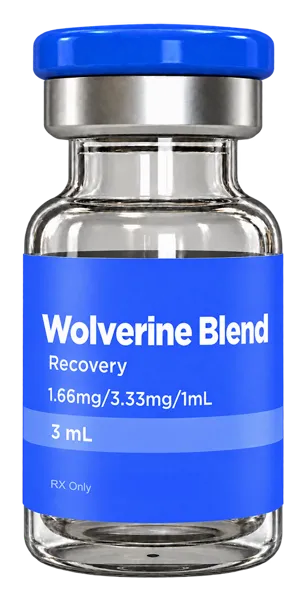
BPC-157, TB-500 and Wolverine blend status: BPC-157: Not FDA-approved. Under a draft HHS policy filed Oct 28, 2026, HHS does not intend to act against licensed compounding of it alone, under strict conditions: injection, oral or topical. TB-500: Not FDA-approved. Under a draft HHS policy filed Oct 28, 2026, HHS does not intend to act against licensed compounding of it alone, under strict conditions: injection only. Wolverine blend (BPC-157 + TB-500): Not FDA-approved. The draft HHS policy filed Oct 28, 2026 covers single-ingredient products only, so this two-peptide blend is not covered. How peptide status works.
Educational information only, not medical advice. Research statements are sourced to the peer-reviewed papers, trial registry record and regulator pages linked above, checked as of October 17, 2026.
Frequently asked questions
Can you take BPC-157 after surgery?
No human study has tested BPC-157 after an orthopaedic operation, so there is no evidence on whether it helps or harms recovery in people. The first trial, a University of Arkansas pilot of BPC-157 after rotator cuff repair, is registered with an estimated start of January 1, 2027. A 2026 UCLA review concluded these peptides should not currently be recommended as a replacement or adjunct to standard orthopaedic care, so the question belongs with your surgeon.
Is BPC-157 safe?
Its safety in people has not been established. FDA says it has identified no, or only limited, safety-related information for BPC-157 and flags possible immune reactions and peptide-related impurities. Our page on BPC-157 side effects sets out what has and has not been measured.
Can BPC-157 cause cancer?
No study has shown that it does, and none has ruled it out. Reviewers raise blood-vessel growth and cancer as theoretical concerns based on how the peptide behaves in lab work, and no data exist for people with a cancer history. Our Wolverine stack safety page covers the blood-vessel growth concern in detail.
Sources (13)
About the editorial team
Advertising disclosure: links marked "Paid link" go to Bodybuilding Peptides (trybbpeptides.com), an affiliate destination, and The Recovery Dose may earn a commission if you buy there. Our coverage is independent of that relationship, and nothing on this page is medical or legal advice.
 See it at Bodybuilding Peptides